
Ask a Scientist
Check out our monthly Facebook Live Q&A sessions with ARS scientists. Learn what we’re doing to help the environment, create more sustainable food supply, fight pests and diseases, and create new cultivars.
Q&A
Our expert discusses the important topic of food waste and food loss.
These "Hubs", at 10 locations, link researchers in their delivery of tools and information to agricultural producers and professionals.
Want to expand your science? Join us as an intern in one of our offices or professional labs and take your knowledge and experience to the next level.
USDA’s Agricultural Research Service offers internship programs to current students and recent graduates, and even Presidential Management Fellowships, to explore federal careers as paid employees. Check out the following opportunities to see best fits your career goals.
The Student Internship Program provides students in high schools, colleges, trade schools, and other qualifying educational institutions, the opportunity to explore Federal careers as paid employees while completing their education. Student Interns may be appointed for an initial period expected to last more than 1 year, on a temporary basis, or to fill traditional summer jobs. Duties are related to the intern’s academic or career goals and our positions are payable up to the GS-11 grade level.
To be eligible for the Student Internship Program, you must be accepted for enrollment or enrolled and seeking a degree (diploma, certificate, etc.) in a qualifying educational institution, on a full or half-time basis, as defined by the institution; be in good academic standing (2.0 GPA); and meet the definition of a student throughout the duration of their internship. Visit USAJobs for more information.
The Recent Graduates Program is a 1-year program that provides recent graduates an entry-level developmental experience that will lead to a civil service career. Positions are payable at the GS-09 level or below unless the position is in a science, technology, engineering, or mathematics (STEM) field. STEM positions may be payable at the GS-11 and GS-12 grade levels, depending on your educational degree.
To be eligible, you must have obtained a qualifying associate, bachelors, master’s, professional, doctorate, vocational, or technical degree or certificate from a qualifying educational institution, within the previous 2 years. Veterans who were unable to apply during the initial eligibility period due to military service obligation have a full 2-year period of eligibility upon his/her release or discharge from active duty. In no event, may a veteran’s eligibility period extend beyond 6 years from the date on which the individual completed the requirements of an academic course of study. Visit USAJobs for more information.
The Hispanic Association of Colleges and Universities (HACU) Internship Program offers a paid internship program for sophomores, juniors, seniors, and graduate students at accredited HACU colleges and universities. HACU Students are brought on board three times per year (spring, summer, and fall) and may continue year-round provided they remain eligible and program funding is available. As compensation, HACU undergraduate interns receive $610 per 40-hour week ($15.25 per hour), while graduate interns receive $680 per 40-hour week ($17.00 per hour).
To be eligible, you must have completed your freshman year before the internship begins, maintain a 3.0 GPA, be enrolled in a degree-seeking program, and be a U.S. citizen. Recent graduates are eligible if they are within 12 months of graduation. In addition, interns must attend an orientation in Washington, DC. Visit HACU for more information.
The Presidential Management Fellows (PMF) Program is designed to attract to the federal service outstanding men and women from a variety of academic disciplines and career paths who have a clear interest in, and commitment to, excellence in the leadership and management of public policies and programs.
The PMF program follows an annual cycle, starting with program announcement by the U.S. Office of Personnel Management (OPM), nomination, application and assessment, followed by appointment, through training and development, then graduation, and conversion or appointment to permanent positions.
To be eligible, you must have completed an advanced degree from a qualifying educational institution within 2 years or are scheduled to complete an advanced degree prior to the date that PMF finalists are announced. This is a competitive process in which OPM selects finalists based on an evaluation of each candidate’s experience and accomplishments. Visit OPM for more information.
Want more cool photos? Check out our image archive.
If you’re a fan of salmon, you’re not alone.
The fish that was once considered a luxury food is now one of the most popular seafoods in the western world. Locally, salmon is the most popular fish species in the United States.
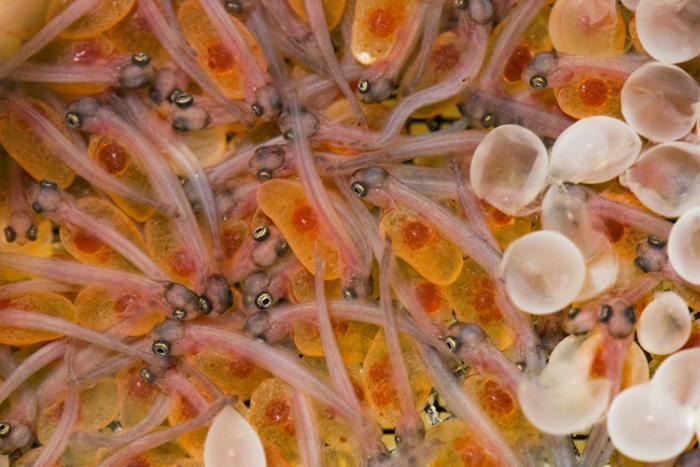
Scientists and staff at the Agricultural Research Service’s (ARS) National Cold Water Marine Aquaculture Center (NCWMAC) in Franklin, ME, have been improving the amount and quality of America’s Atlantic salmon for nearly 20 years.
“Since 2003, the center has worked with stakeholders to produce a North American strain of Atlantic salmon that exhibits traits producers and consumers want,” said Brian Peterson, NCWMAC research leader.
NCWMAC’s selective breeding program focuses on traits such as carcass weight, sea lice resistance, fatty acid profile, and fillet color. The center also helps North American producers compete with international producers by conducting disease and nutrition research.
According to Peterson, the NCWMAC uses traditional non-GMO breeding methods to raise about 150 families of fish each year that have been selected for improved growth and sea lice resistance. Sea lice are small crustations that attach themselves to the skin of fish and are not harmful to humans. Each year, the U.S. aquaculture industry receives a limited amount of salmon eggs from these families. These eggs are then raised by commercial farmers, who then spawn the fish that are commercially reared in net pens.
Americans consume nearly 450 tons of salmon each year, and ARS is helping keep the nets full. That’s good eatin’! – By Scott Elliott, ARS Office of Communications
Scientific Name: Casmara subagronoma Lvovsky
Common Name: Downy rose myrtle borer
Friend or Pest (or both): Friend.
Region and Diet? This moth is native to Southeast Asia and its caterpillar feeds on the tissues inside stems of plants in the myrtle family.
Impact on agriculture? Downy rose myrtle is an evergreen shrub from Southeast Asia that is invasive in Hawai'i and Florida. The shrub spreads quickly and can take over spaces dedicated to productive crops and plants, thereby robbing them of valuable nutrients to grow. ARS scientists teamed up to study whether this hungry moth caterpillar, also from Southeast Asia, could be used to kill and control the pesky plant. Read the abstract to learn more.
Did you know that ARS scientists developed a tasty, nutrient-rich peanut butter alternative made from sunflower seeds? Sunflower seeds are a good source of protein, fiber, vitamin E, zinc, and iron.
Although they are a popular peanut alternative, no company had ever successfully marketed a spreadable sunflower seed butter until several years ago when Red River Commodities unveiled a new spread created with the help of the ARS Southern Regional Research Center in New Orleans, La.
Learn more about this tasty treat.
Scientific Name: Cactoblasis cactorum
Common Name: Cactus moth
Friend or Pest (or both): Both.
Region and Diet? United States, recently in Texas. Commonly found in gardens or roadsides wherever prickly pear grows.
Impact on agriculture? These caterpillars started as a “friend” because they controlled Opuntia spp. or prickly pear worldwide, but the species became an invasive “pest” when it was discovered in Florida and started to spread westward. It is important to keep track of this destructive species in the United States and conduct research to try to decrease its populations and slow its westward and southward movement.
Biodiversity describes the different kinds of organisms found in an area. Scientists use biodiversity to measure the health of a particular ecosystem or habitat. For example, a pond with lily pads, aquatic grasses, insects, frogs, fish, and birds has a high biodiversity and would be considered a healthy ecosystem. The many kinds of plants found in this healthy pond provide food and shelter for different aquatic insects and small animals, which provide food for predators such as large fish and birds. Lowering the biodiversity of this pond by removing some of the plants or animals could harm all the other living things in this pond. In agriculture, high plant biodiversity (such as many kinds of flowering plants) around gardens or within orchards provide food and shelter for predators and parasitoids, which can control insect pests without the use of insecticides.
About the ExperimentIt's time to get your hands dirty like a scientist! Try this experiment to measure biodiversity around your yard or school and see how biodiversity at the plant level affects biodiversity at the insect level.
![]() |
Details
|
![]() |
|
![]() |
|
What You'll Need
Let's Do This!Warning: Be aware that some insects may sting. Younger explorers should conduct this experiment with an adult.
What Did You Learn?
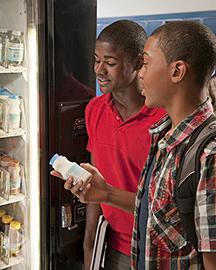
Do you know how to store food safely in your kitchen? We usually store our groceries in the pantry, the refrigerator or the freezer. Why do we do this? All food is stored to help prevent both spoilage and germs that can make your family sick.
The USDA has an app to help you learn how to store the foods that you eat properly! This app is called Food Keeper, which you can also find on Nutrition.gov's Safe Food Storage page.
Each food will have what is called a shelf life, or the number of days that it can stay fresh before being thrown out. This app can help you prevent food waste, prepare meals, and keep foods fresh for your family!
Take yourself on a mini scavenger hunt on Food Keeper!
Think about food safety the next time you are cooking with your family in the kitchen.
To learn more about storing foods safely, visit Nutrition.gov.
After grappling with a malady that decimates farm-raised catfish, ARS scientists at the Aquatic Animal Health Research lab in Auburn, AL, are close to landing answers and potential remedies to the elusive disease.
Aeromonas hydrophila has ravaged the catfish farming industry in Alabama and other states since its discovery in 2009. The bacterial disease causes hemorrhages on the fish’s body, loss of orientation, and rapid death. Last year, Alabama catfish farmers lost about $13.5 million in revenue – 9% higher than the previous year – due to fish mortality, costs of medicated feed and chemical treatments, and lost feeding days.
Scientists are taking a holistic approach to their research, systematically studying the impact of diet, oxygen depletion, chemical treatments, abrasions, parasite infections, and more to understand how the pathogen works.
Read this article to learn more