




Can AI help cattle farmers boost production?
ARS scientists in Bushland, TX, joined forces with generative artificial intelligence (GenAI) experts at Iowa State University and cattle nutrition experts at Texas A&M University to address a long-standing challenge for farmers: producing more meat with less feed. To accomplish this, scientists are harnessing machine learning and GenAI to fast-track discoveries that capture the thousands of biochemical processes inside a cow’s stomach, converting feed into energy, body mass, and ultimately high-quality meat. They have identified new strategies to reduce enteric methane, a natural by-product of microbial feed digestion, resulting in more building blocks to improve meat production efficiency.
Take a Deeper Dive:
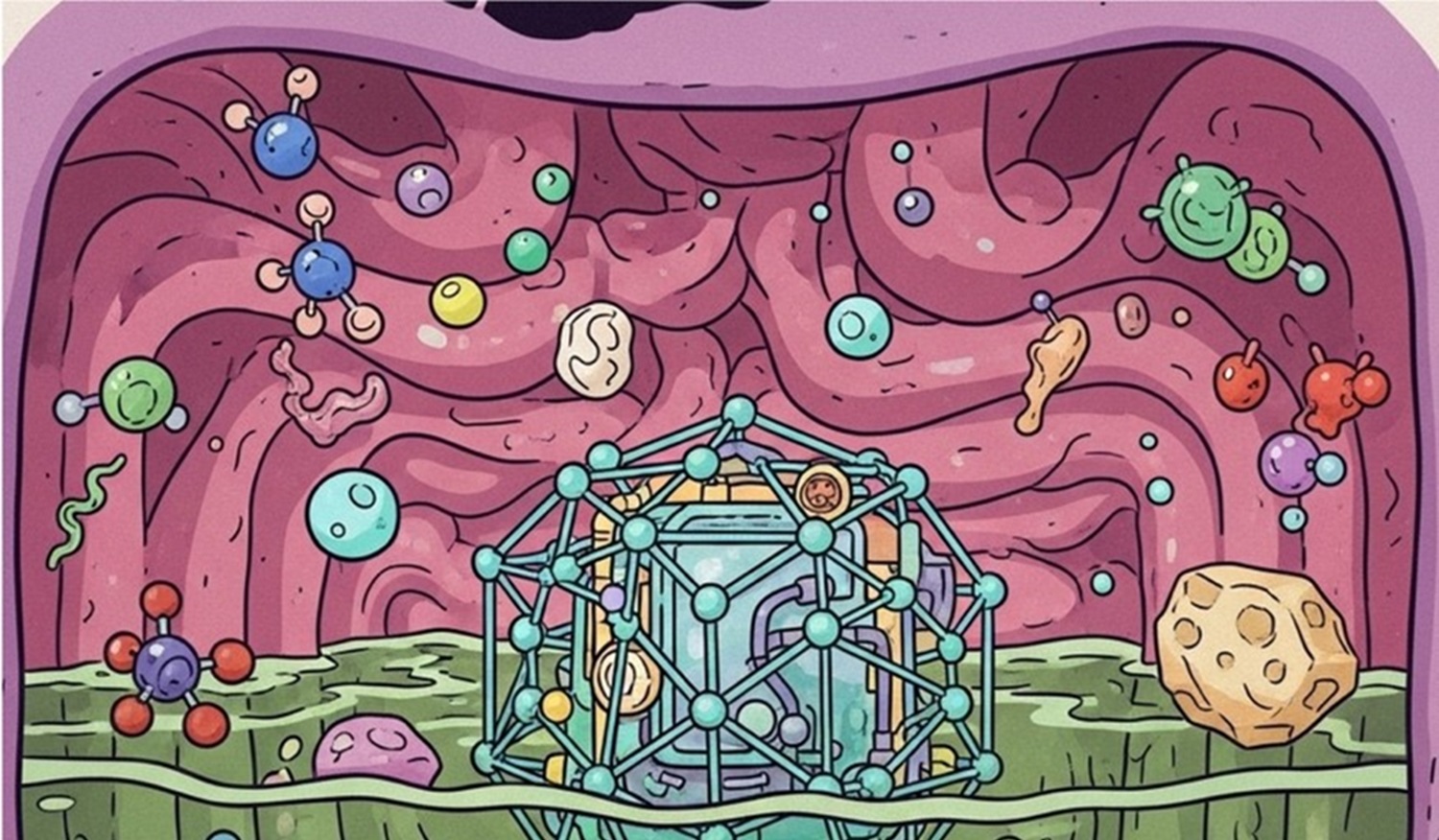
Cows have four stomach compartments, and in the largest one, microorganisms help them digest food, producing methane gas as a waste product. Reducing methane gas generation will improve meat production efficiency, but identifying and evaluating potential solutions is tricky and takes a lot of time and funding. Past studies have found that a molecule called bromoform can reduce methane generation, but there are potential safety concerns. Therefore, scientists are using this knowledge to search for other safe options that work just as well. That’s where AI comes in!
In their quest for solutions, scientists are training GenAI to identify molecules with characteristics similar to bromoform that can reduce methane gas generation in cattle while being non-toxic and safe for human consumption. It is like finding ‘a needle in a haystack,’ but scientists are confident that using GenAI can expedite this process. Using GenAI, scientists are examining thousands of tiny molecules to understand their behavior inside a cow's stomach. They are predicting which ones may help reduce gas production without toxicity and then test them in a laboratory to ensure safety before being used in animal feed. This interactive process, where the results from lab tests are fed back into the computer models, continually improves the AI model’s accuracy and speeds up the search for effective, non-toxic solutions. So far, 15 new molecules have been identified that could function similarly to bromoform but are safer, demonstrating that combining AI with laboratory research is a valuable scientific tool.
AI can accelerate the work of animal nutritionists, researchers, and the livestock industry, getting us closer to the ranchers’ goal of making agriculture more profitable and resilient.
Learn more here: https://www.ars.usda.gov/news-events/news/research-news/2025/scientists-leverage-ai-to-fast-track-methane-mitigation-strategies-in-animal-agriculture/